

HALAL Certification Renewal: Why It Is an Indispensable Lifeline for Packaging Factories?
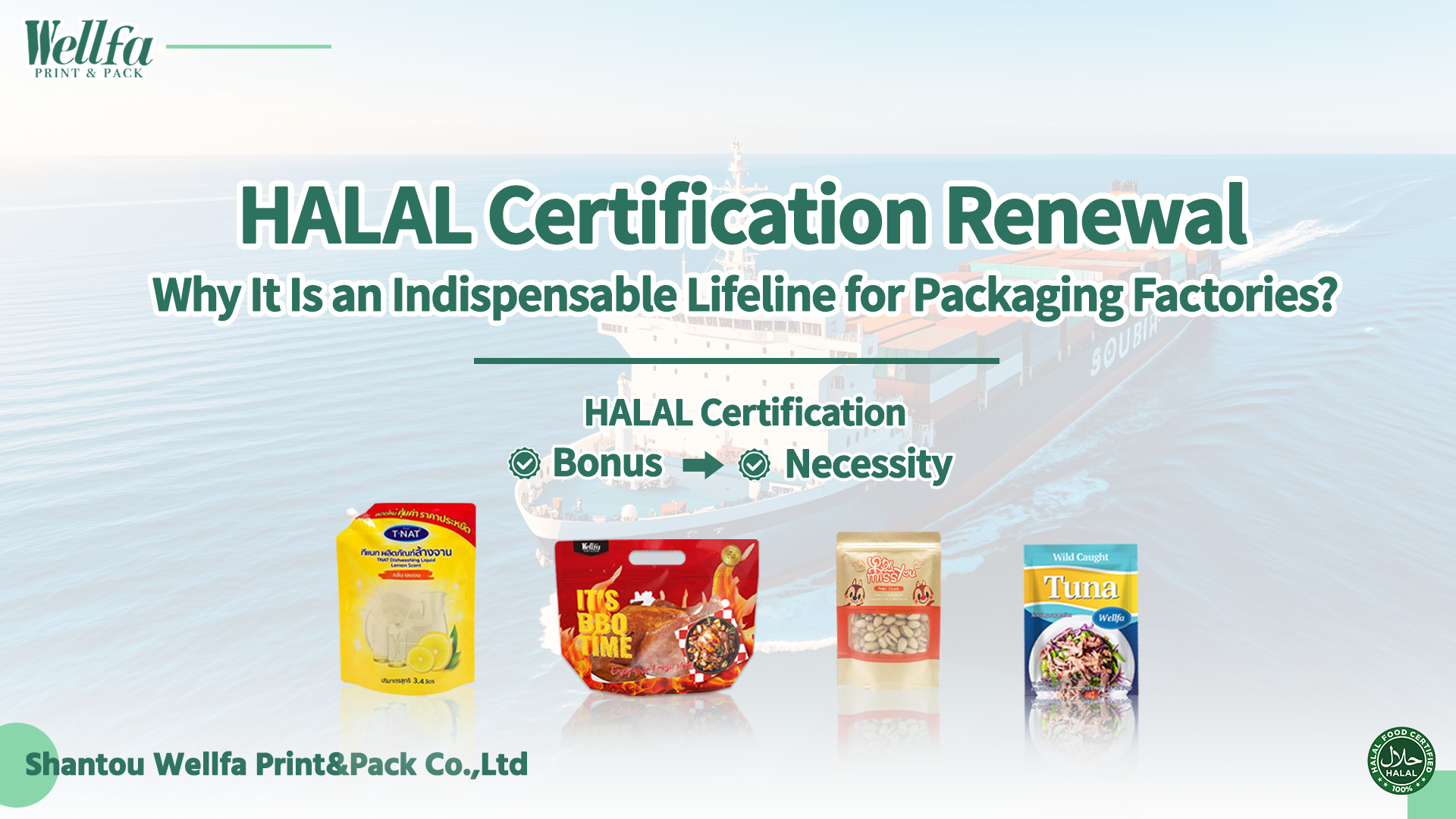
“Why does our packaging bag, merely a container, require HALAL certification?” This is a common question from managers of integrated manufacturing and trading foreign trade companies. However, in the international food packaging trade, the answer is becoming increasingly clear: HALAL certification has shifted from a “bonus” to a “necessity,” especially for enterprises like WELLFA that focus on the production and export of packaging bags.
I.The “Invisible Contamination” in Packaging: Why HALAL Certification is Crucial
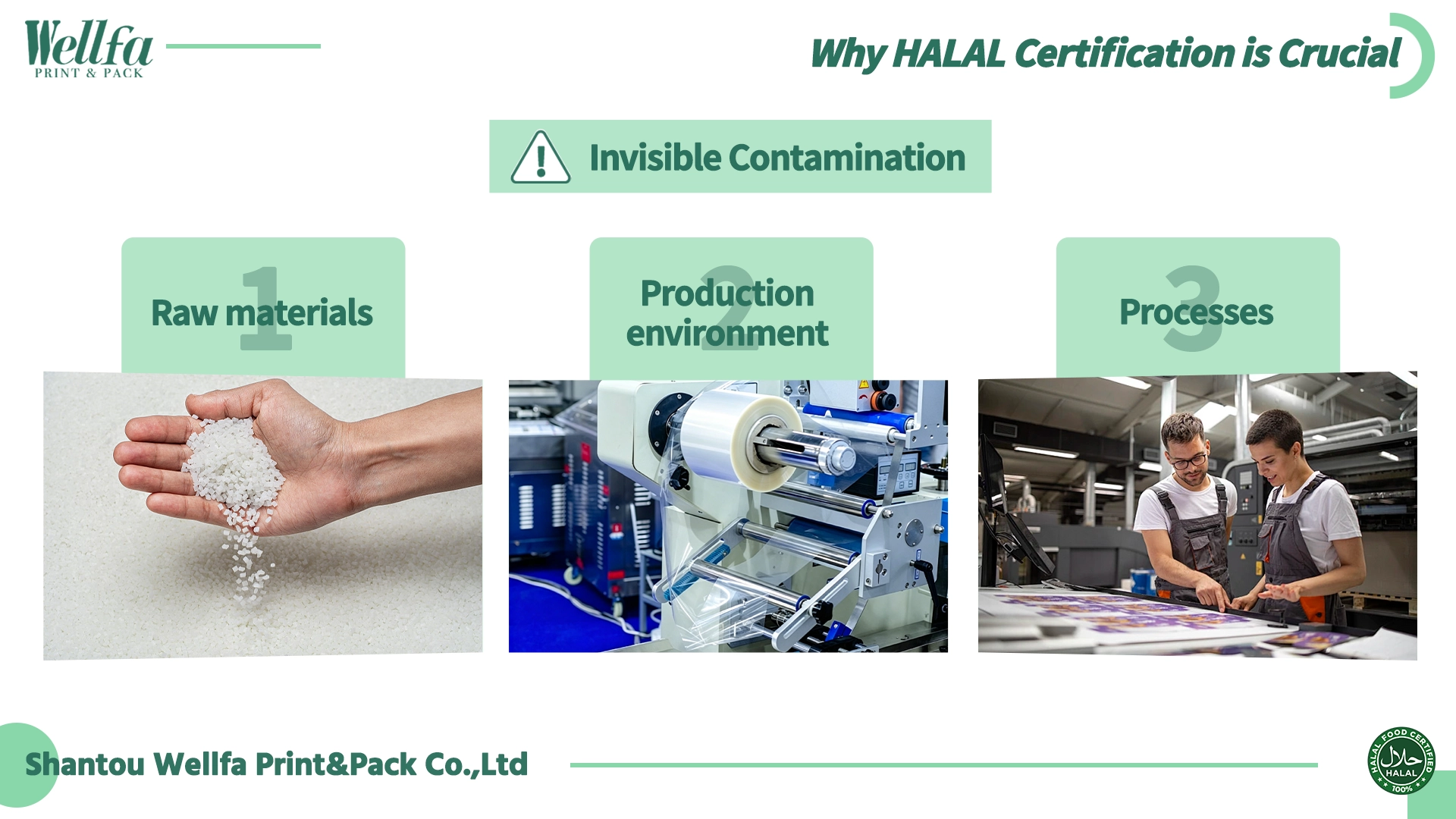
Many food companies believe that as long as the ingredients themselves comply with Islamic law (Sharia), the production process is HALAL-guaranteed. This perception overlooks the risk of cross-contamination that the packaging stage may introduce. In fact, packaging materials come into direct contact with food, and their raw materials, production environment, and processes can all become sources of contamination.
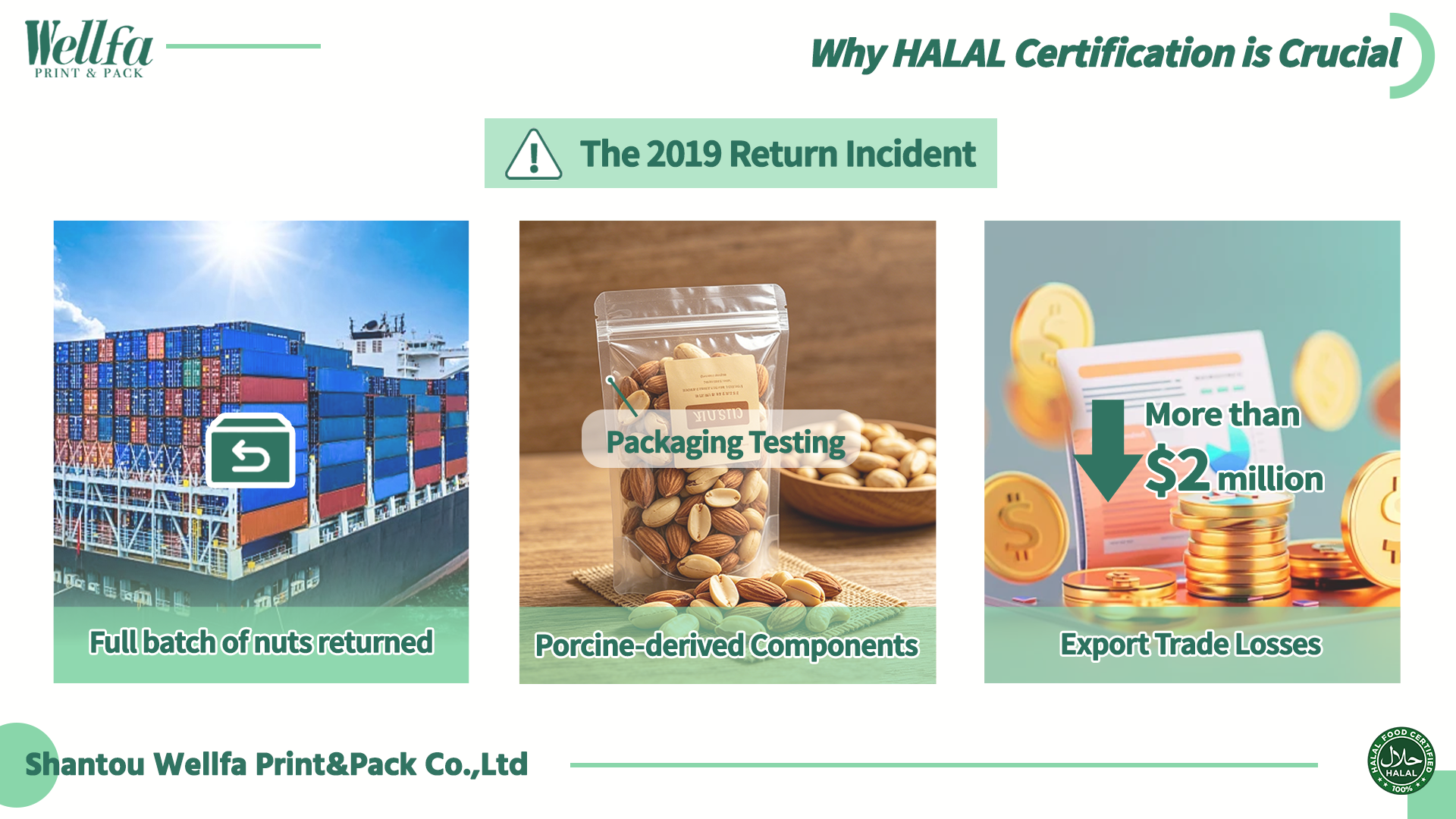
For example, some plastic packaging bags might use animal-derived additives (such as stearic acid, often sourced from pigs or cattle); printing inks may contain alcohol-based solvents; production lines might have previously handled non-HALAL products without thorough cleaning. In 2019, a Middle Eastern country returned an entire shipment of nuts exported from China, not because of the nuts themselves, but because testing detected trace amounts of porcine-derived components in the packaging bags. This incident caused losses exceeding $2 million for the exporting company and severely damaged its market reputation.
II. Certification Renewal: Not Just Continuation, But a Comprehensive Upgrade
HALAL certification is not a one-time effort. Typically valid for 1-2 years, it must be renewed upon expiration. Recent renewal processes have become increasingly stringent, reflecting three key upgrades in international HALAL standards:
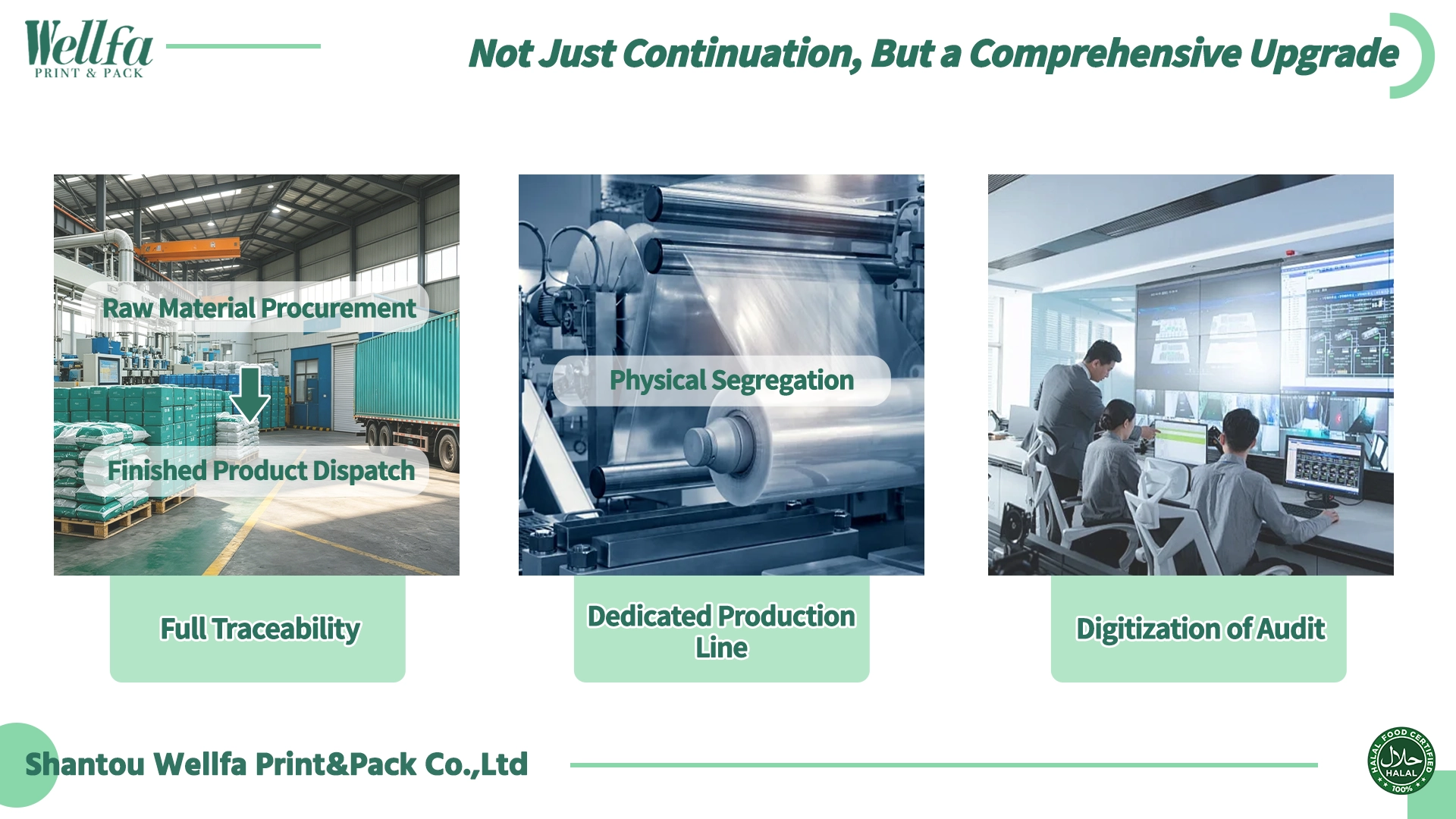
Enhanced Traceability Requirements: Newer versions require full traceability of packaging materials from raw material procurement to finished product dispatch, including all auxiliary materials like additives, inks, and adhesives.
Stricter Production Segregation: If the same production line also manufactures non-HALAL products, strict cleaning procedures and segregation measures must be documented and proven. Many certifying bodies now require physical segregation or dedicated production lines.
Digitization of Audit Methods: More certifying bodies are adopting real-time monitoring and digital record reviews, going beyond annual on-site inspections.
III. Dual Advantages and Responsibilities for Integrated Manufacturing & Trading Enterprises
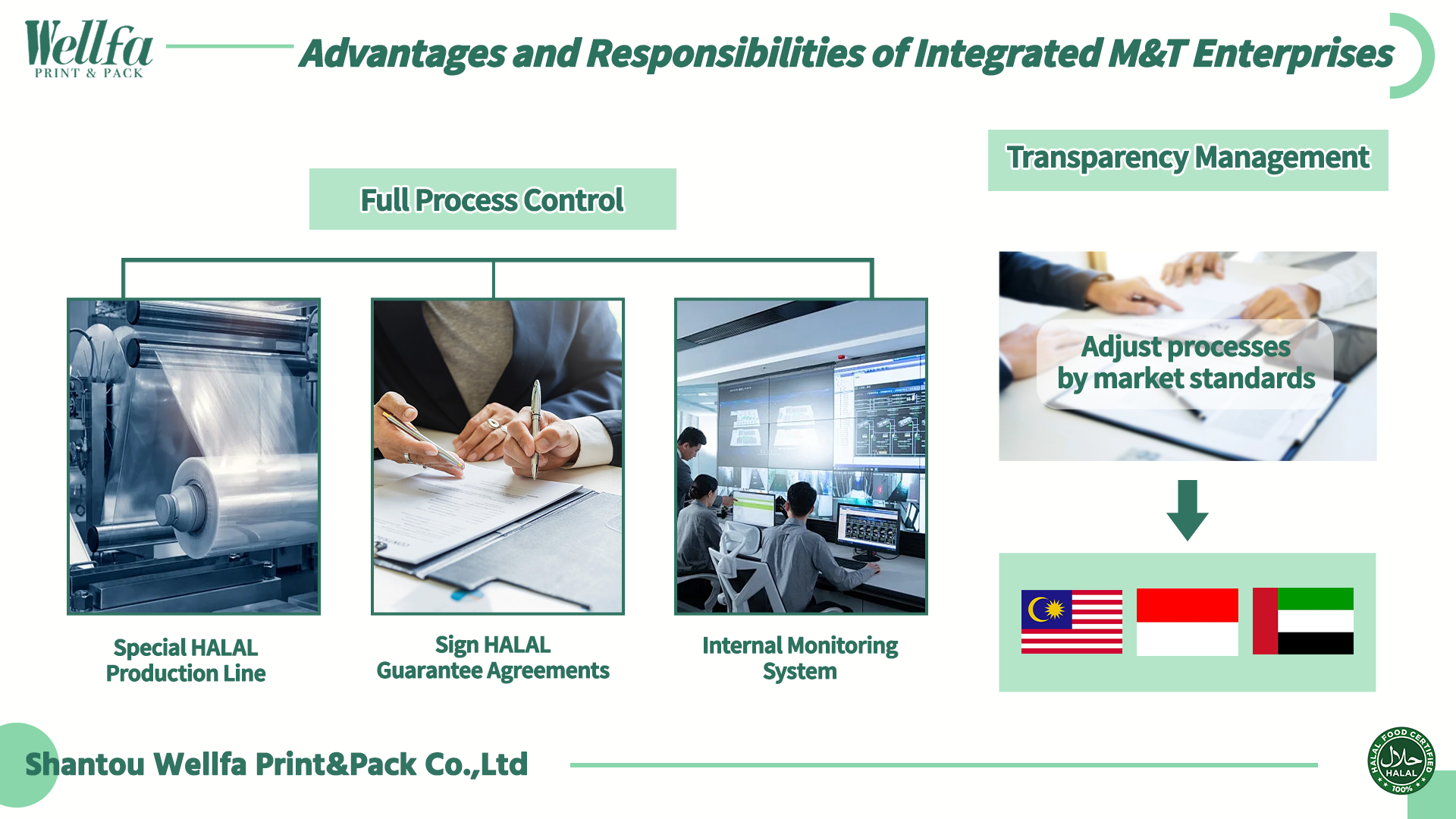
As an integrated packaging bag manufacturer and trader, we possess unique advantages but also face higher demands regarding HALAL certification:
Advantage lies in Control: We maintain full control from raw material sourcing to manufacturing, enabling better assurance of HALAL compliance compared to pure trading companies. We can establish dedicated HALAL production lines, sign HALAL guarantee agreements with suppliers, and implement internal monitoring systems.
Responsibility lies in Transparency: We must provide complete evidence chains to our clients (food companies) and the final certifying bodies. Requirements differ across key Islamic markets like Malaysia, Indonesia, and the UAE, necessitating adjustments to our processes and meticulous record-keeping according to respective market standards.
IV. HALAL Certificate Renewal: The Invisible Engine Driving Technological Upgrade and Product Innovation
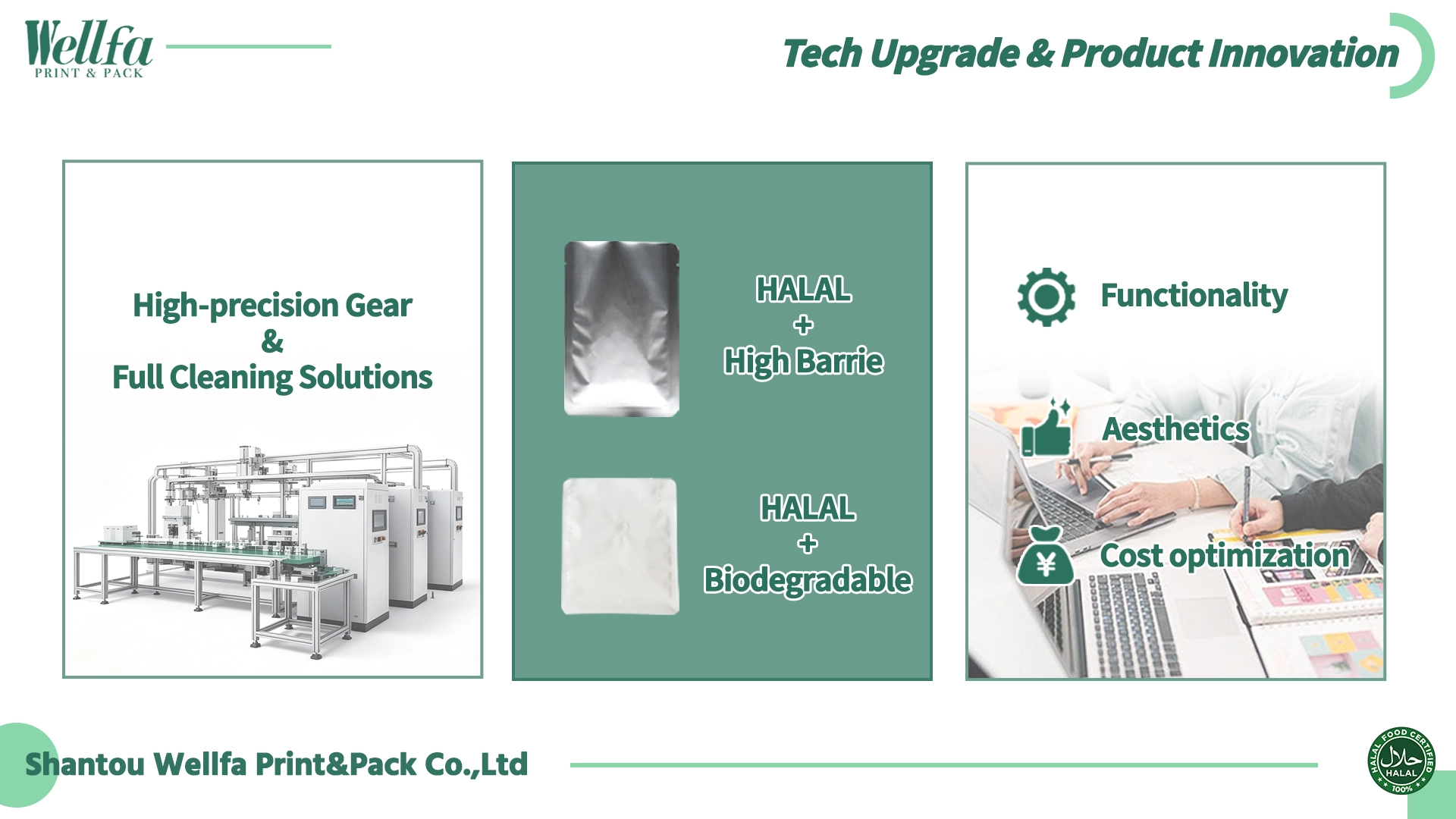
For integrated enterprises, the ongoing renewal of HALAL certification is not merely a compliance check but a strategic opportunity that spurs technological and process innovation while enhancing product added value.
Promoting Green Innovation in Raw Materials and Processes: To meet increasingly stringent HALAL and safety requirements, companies must seek purer, traceable solutions at the raw material level. In production processes, investment in more precise equipment and more thorough cleaning systems is essential to eliminate any potential cross-contamination. This process itself acts as a catalyst for technological iteration and process optimization.
Creating Differentiated Competitive Advantage: When most packaging in the market offers only basic functionality, a consistently renewed HALAL certificate and the “pure production” commitment it represents become a powerful product selling point. This can be combined with concepts like “food-grade safety” to develop premium, high-value-added product lines such as “HALAL + High Barrier” or “HALAL + Biodegradable,” thereby escaping homogenized price competition.
Providing Clear Direction and Endorsement for R&D: HALAL standards provide a clear, high-standard framework for new product development. R&D teams can focus on functionality, aesthetics, and cost optimization while ensuring compliance. New products launched this way inherently possess a passport to the vast HALAL market, making the market conversion path for R&D investment clearer and less risky.
V. Beyond Compliance: The Commercial Value of HALAL Certification
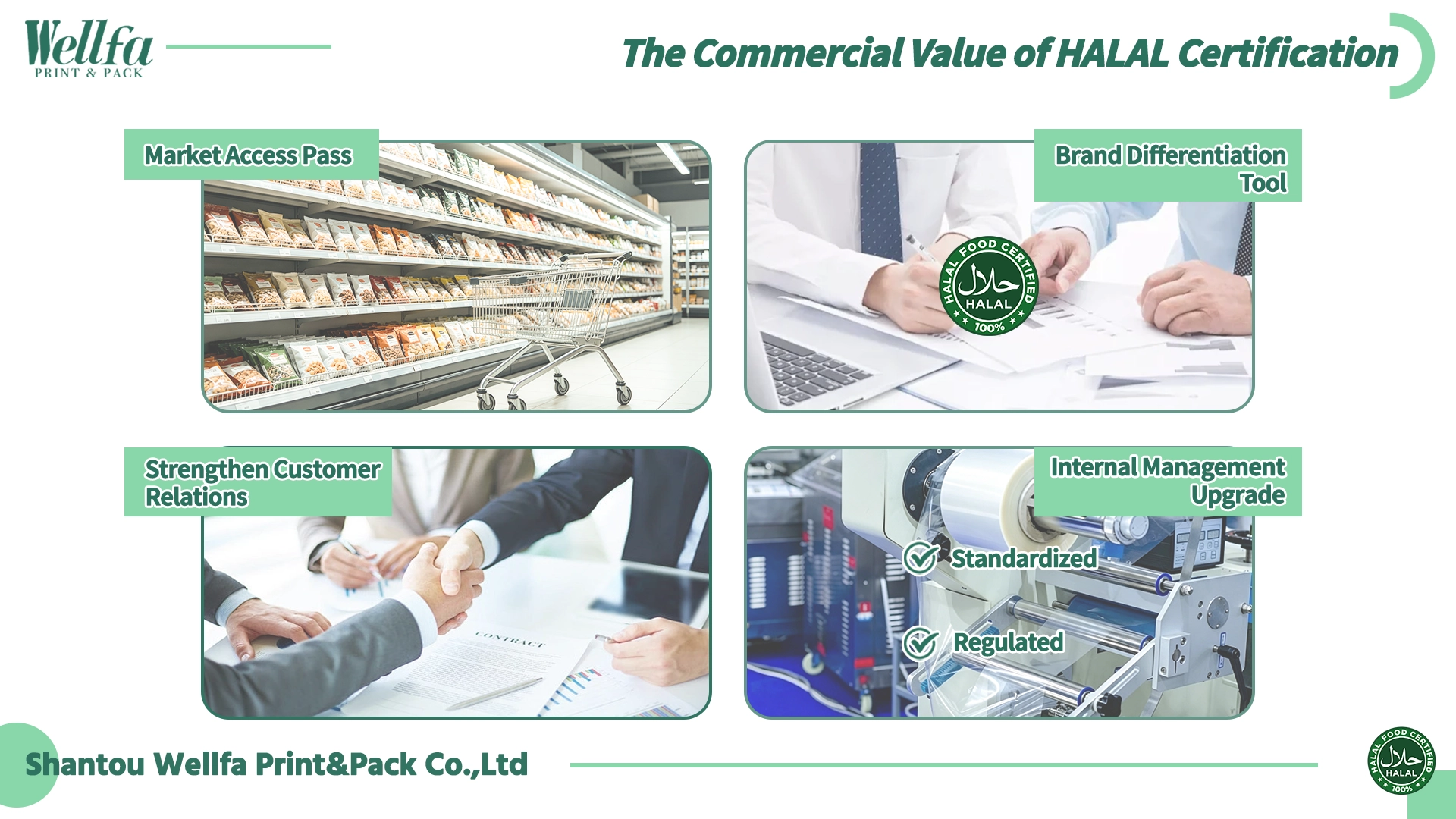
Maintaining HALAL certification renewal offers value far beyond risk avoidance. It effectively serves as:
A Market Access Pass: Many large supermarkets and food companies in Islamic countries only procure HALAL-certified packaging.
A Brand Differentiation Tool: In the fiercely competitive packaging industry, valid HALAL certification is an important trust marker.
A Customer Relationship Strengthener: It helps food clients reduce their own certification difficulties and risks, fostering long-term partnerships.
An Opportunity for internal management improvement: The strict HALAL requirements have actually promoted the standardization and normalization of the overall production management.
Conclusion
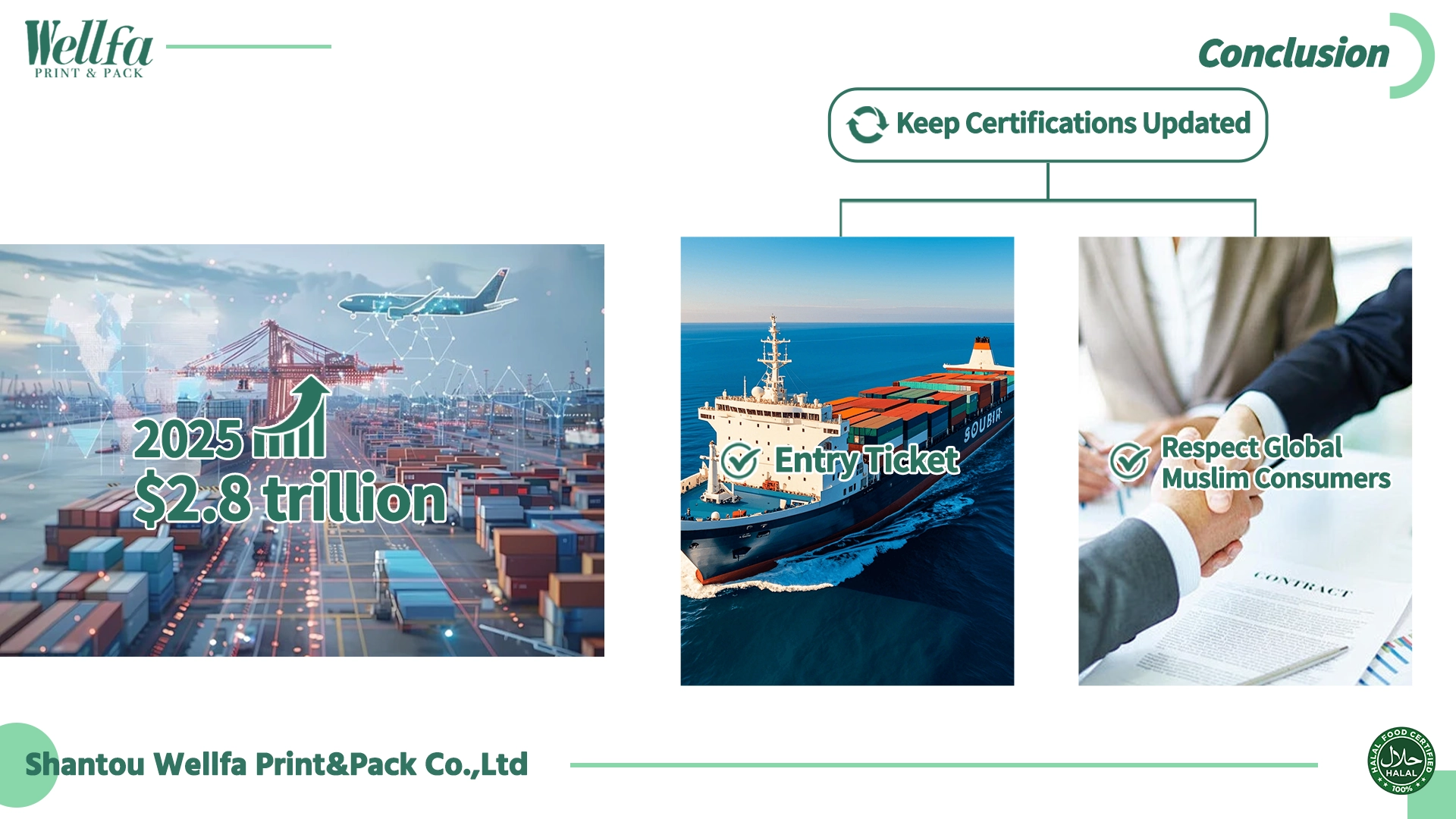
The global HALAL market is projected to reach $2.8 trillion by 2025, with packaging being a crucial yet often overlooked component. For integrated packaging bag manufacturers, HALAL certification is no longer just a “product certification” but also a “system certification” and a “trust certification.” Keeping the certification promptly renewed means we maintain our “entry ticket” in the global HALAL economy and signifies our commitment to respecting and being responsible towards global Muslim consumers.
In this era of increasing focus on transparency and credibility, packaging is no longer just a container; it is an extension of food safety and religious respect. Each successful renewal of HALAL certification reaffirms and deepens our trust-based relationships with global clients and consumers.
Great content! Keep up the good work!